


Latest insights

How to Use a Qualified Escrow Account to Protect 1031 Funds in 2026

September 3, 2026

By team Precision Exchange

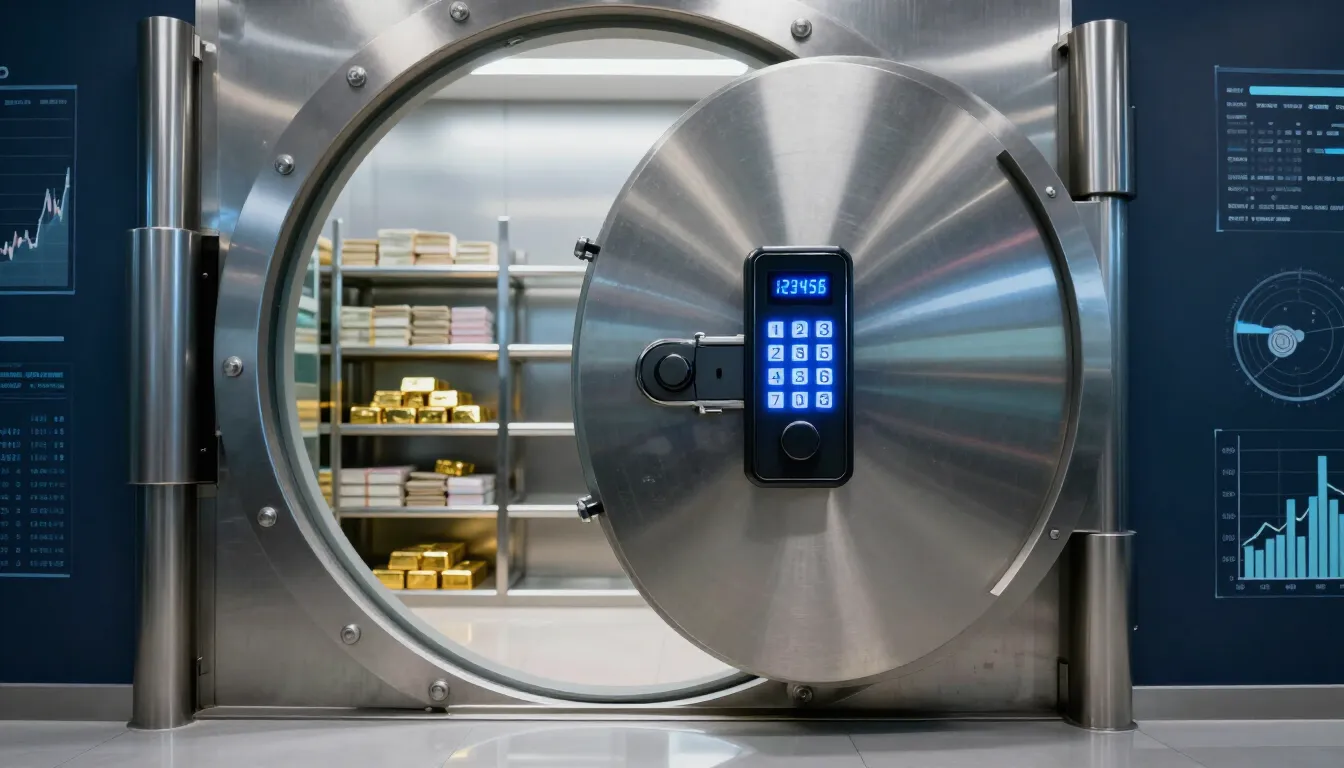
A Qualified Escrow Account is a restricted financial arrangement used in 1031 exchanges to safeguard sale proceeds. Governed by Treasury Regulation § 1.1031(k)-1(g)(3), it prevents constructive receipt by the investor while providing a bankruptcy-remote shield, ensuring that exchange funds are protected from a Qualified Intermediary’s potential creditors or insolvency.

What is a Qualified Escrow Account in a 1031 Exchange?

In the realm of real estate investment, a 1031 exchange represents one of the most powerful wealth-building tools available. However, the success of this strategy hinges on the safety of the funds during the exchange period. A Qualified Escrow Account (QEA) serves as a legal "safe harbor" defined by the IRS to help investors avoid the pitfalls of constructive receipt while simultaneously ensuring their capital is not commingled with the operating funds of a Qualified Intermediary (QI). At Precision Holdings, Inc. , we prioritize these structures to ensure every client’s capital is insulated from outside risks.

The Internal Revenue Code (IRC) Section 1031 allows an investor to defer capital gains taxes by swapping one investment property for another of "like-kind." Between the sale of the relinquished property and the purchase of the replacement property, the cash proceeds must be held by a neutral third party—the Qualified Intermediary. A common concern for investors is what happens to that money while it sits in the QI’s hands. A Qualified Escrow Account is the answer to that concern. It is a specific type of account where the escrow holder is not the taxpayer or a disqualified person, and the assets are held in a way that limits the taxpayer's access to the funds until the exchange is complete or the statutory time limits expire.

Professional Signing Documents

Understanding the Treasury Regulations Safe Harbors

The IRS provides four specific safe harbors that, when followed, ensure the investor is not deemed to be in receipt of the exchange funds. Constructive receipt is the "kiss of death" for a 1031 exchange; if the IRS decides you had access to the money, the entire transaction becomes taxable. The Qualified Escrow Account is one of these four safe harbors. To meet the regulatory requirements, the escrow agreement must expressly limit the taxpayer’s rights to receive, pledge, borrow, or otherwise obtain the benefits of the cash or cash equivalent held in the escrow.

This legal structure is essential because it transforms the relationship between the investor, the QI, and the bank. Without a QEA, the funds might simply reside in a general corporate account of the QI. If that QI were to face legal trouble, bankruptcy, or internal fraud, the investor’s funds could be frozen or seized by creditors. By utilizing a Qualified Escrow Account, the investor creates a fiduciary boundary that keeps their money separate and identifiable.

How does an escrow account prevent constructive receipt?

The concept of "constructive receipt" is the central pillar of 1031 exchange law. According to the IRS, a taxpayer is in constructive receipt of income if it is credited to their account, set apart for them, or otherwise made available so that they may draw upon it at any time. In a 1031 exchange, the goal is to never touch the money. If you sell a property for $1 million and that money hits your personal bank account for even one second, you owe capital gains tax.

A Qualified Escrow Account prevents this by creating a legal barrier. The funds flow directly from the closing agent of the sold property into the escrow account. The escrow agreement dictates that the funds can only be released for very specific purposes: the purchase of replacement property or the payment of permitted exchange expenses. Because the investor has no legal right to demand the cash for personal use during the 180-day exchange period (subject to limited exceptions), the IRS views the transaction as a continuous exchange of property rather than a sale followed by a purchase.

The Risks of QI Insolvency and General Accounts

Many investors assume that all Qualified Intermediaries handle money the same way. Unfortunately, that is not the case. Some QIs use "commingled" or "general" accounts, where the funds of dozens of different investors are pooled together into one large corporate bank account. While this is easier for the QI to manage, it poses a massive risk to the investor. If the QI firm experiences financial distress, those pooled funds can be considered assets of the QI’s estate in a bankruptcy proceeding.

In contrast, a Qualified Escrow Account provides:

  • Asset Segregation: Funds are held in a separate account dedicated to that specific transaction.
  • Bankruptcy Remoteness: The funds are not considered part of the QI’s general assets.
  • Transparency: Investors can often receive monthly statements directly from the financial institution.
  • Regulatory Compliance: It strictly adheres to the IRS safe harbor guidelines.
  • Fraud Mitigation: Third-party oversight makes it much harder for unauthorized transfers to occur.

When you work with a firm like Precision Holdings, Inc. , you are choosing a partner that understands these nuances. We advocate for the highest levels of fund security because we know that a 1031 exchange is often the culmination of years of hard work and appreciation. Protecting that equity is our primary mission.

Benefits of Bankruptcy-Remote Account Structures

A bankruptcy-remote structure is a legal design intended to insulate a specific asset from the bankruptcy of a parent company or intermediary. In the context of a 1031 exchange, this means that even if the Qualified Intermediary files for Chapter 7 or Chapter 11 bankruptcy, the funds held in the Qualified Escrow Account should remain untouched. They are held "in trust" for the benefit of the exchange, meaning the QI’s creditors have no legal claim to them. This is a vital layer of protection that every sophisticated real estate investor should demand. Without it, you are effectively an unsecured creditor of your QI—a dangerous position to be in when millions of dollars are at stake.

Why is dual-signature protection important for investors?

Beyond the legal structure of the account itself, the mechanism for moving money is a critical safety feature. A Qualified Escrow Account can be set up with a "dual-signature" requirement. This means that for any funds to be moved out of the account—whether to pay for a replacement property or to pay an earnest money deposit—both the Qualified Intermediary and the investor must sign off on the wire transfer.

This prevents a "rogue employee" scenario at a QI firm where someone could theoretically wire funds to an unauthorized account. It also ensures that the investor has final oversight of where their money is going. While it adds a small step to the process, the peace of mind it provides is immeasurable. At Precision Holdings, Inc., we encourage investors to inquire about these types of procedural safeguards to ensure their capital is never moved without their express, written consent.

Legal Security and Gavel

Key Differences Between Escrow and General Accounts

To help clarify the choice, it is helpful to compare the two primary ways QIs hold funds. A general account is essentially a loan from you to the QI; you are trusting them to pay you back by purchasing your next property. A Qualified Escrow Account is a fiduciary arrangement where the money remains "yours" in a legal sense, held for the specific purpose of the exchange.

| Feature | General Commingled Account | Qualified Escrow Account | | :--- | :--- | :--- | | Ownership | Assets of the QI | Held for the Taxpayer | | Bankruptcy Risk | High; funds may be seized | Low; bankruptcy remote | | IRS Safe Harbor | Not a specific safe harbor | Fully compliant safe harbor | | Visibility | None to low | High; individual statements | | Signature Control | Usually QI only | Can be dual-signature |

Best Practices for Securing Exchange Proceeds

Securing your 1031 exchange funds requires a proactive approach. Do not wait until the day of closing to ask how your money will be held. Instead, follow these steps to ensure maximum protection:

  1. Request a QEA: Explicitly ask your Qualified Intermediary to use a Qualified Escrow Account with a top-tier financial institution.
  2. Verify the Institution: Ensure the bank holding the escrow is FDIC-insured and has a strong credit rating.
  3. Review the Agreement: Read the escrow agreement carefully to ensure it limits your access to funds in accordance with Treasury Reg § 1.1031(k)-1(g)(3).
  4. Confirm the TIN: Ensure the account is set up using your Taxpayer Identification Number (TIN) or Social Security Number so the interest earned is correctly attributed to you.
  5. Check for Fidelity Bonding: Ensure your QI carries significant fidelity bond and errors & omissions (E&O) insurance in addition to using escrow accounts.

How to implement a Qualified Escrow for your next exchange

Implementing a Qualified Escrow Account is a straightforward process when you work with an experienced intermediary. Once you have identified your QI, you will enter into an Exchange Agreement and a separate Escrow Agreement. The escrow holder (usually a bank or trust company) will open the account in the name of the QI "for the benefit of" (FBO) the investor. The sales proceeds from your relinquished property are then wired directly into this account.

During the 45-day identification period and the subsequent 180-day purchase period, the funds remain in the QEA. When you are ready to close on your replacement property, the QI coordinates with the escrow holder to wire the funds to the closing agent. By following this protocol, you maintain the integrity of the tax deferral while keeping your capital in a secure, transparent environment.

Summary of Fund Protection Strategies

Protecting your 1031 exchange funds is just as important as finding the right replacement property. A Qualified Escrow Account is the gold standard for fund security, offering a legal safe harbor against constructive receipt and a robust defense against QI insolvency. By choosing a partner that utilizes these structures, you ensure that your real estate transition is both tax-efficient and secure.

Key Takeaways:

  • Qualified Escrow Accounts are an IRS-approved safe harbor for holding 1031 funds.
  • QEAs provide bankruptcy-remote protection, keeping your money safe from a QI’s creditors.
  • Using these accounts prevents constructive receipt , ensuring you don't lose your tax-deferred status.
  • Dual-signature requirements add an extra layer of security against unauthorized fund movement.
  • Always verify that your QI uses segregated accounts rather than commingled general funds.

If you are planning a 1031 exchange and want to ensure your funds are handled with the highest level of professional care, we invite you to Book a Consultation with our team. At Precision Holdings, Inc., we are committed to providing nationwide service that prioritizes the security of your investment capital above all else. Understanding the role of a Qualified Escrow Account is the first step toward a successful, worry-free exchange process.

Other insights


More from Precision Exchange

By Precision Exchange, Inc. • September 3, 2026
Avoid the most common pitfalls that put first-time 1031 exchange investors at risk of losing their tax deferral.

By Precision Exchange, Inc. • September 3, 2026
The qualities and safeguards that separate a trustworthy 1031 qualified intermediary from the rest.

By Precision Exchange, Inc. • September 3, 2026
A clear breakdown of the two critical deadlines that govern every 1031 exchange, and how to avoid missing them.

By Precision Exchange, Inc. • September 3, 2026
Compare forward and reverse 1031 exchanges to determine which structure best matches your transaction timeline.

By Precision Exchange, Inc. • September 3, 2026
Understand how 1031 exchange state tax clawback rules in states like California affect your investment strategy and tax deferral requirements.

By Precision Exchange, Inc. • September 3, 2026
Learn how to execute a 1031 exchange on a primary residence converted to a rental property. Discover IRS requirements, timelines, and tax strategies for 2026.

By Precision Exchange, Inc. • September 3, 2026
Learn the most common 1031 exchange documentation mistakes that disqualify investors. Ensure IRC Section 1031 compliance and protect your tax deferral.

By Precision Exchange, Inc. • September 3, 2026
Learn how 1031 exchanges impact estate planning and how a step-up in basis can eliminate deferred capital gains tax for your heirs.

By Precision Exchange, Inc. • September 3, 2026
Learn how to manage your CPA, attorney, and Qualified Intermediary (QI) for a seamless 1031 exchange and maximize tax savings.

By Precision Exchange, Inc. • September 3, 2026
Learn what qualifies as like-kind property in a 1031 exchange. Discover IRC Section 1031 requirements for real estate investors to defer capital gains tax nationwide.

By Precision Exchange, Inc. • September 3, 2026
Discover how Delaware Statutory Trusts (DSTs) function as replacement properties for 1031 exchanges. Learn about benefits, IRS rules, and risk factors for real estate investors.

By Precision Exchange, Inc. • September 3, 2026
Compare 1031 exchanges and Opportunity Zones to maximize tax deferral. Learn which real estate strategy fits your investment goals in 2026.

By Precision Exchange, Inc. • September 3, 2026
Learn what boot is in a 1031 exchange, the difference between cash and mortgage boot, and expert strategies to ensure a fully tax-deferred real estate exchange in 2026.

By Precision Exchange, Inc. • September 3, 2026
Learn how depreciation recapture impacts your 1031 exchange and how to defer taxes effectively. Expert guide for real estate investors nationwide.

By Precision Exchange, Inc. • September 3, 2026
Understand the IRS rules for 1031 exchanges on vacation homes. Learn about Revenue Procedure 2008-16 and how to defer capital gains tax on second homes.

By Precision Exchange, Inc. • September 3, 2026
Learn how to use a 1031 exchange to consolidate multiple properties into one high-value asset while deferring capital gains taxes and simplifying management.

By Precision Exchange, Inc. • September 3, 2026
Maximize your real estate portfolio with our 2026 guide to 1031 exchange year-end tax planning. Learn to defer capital gains and manage deadlines effectively.

By Precision Exchange, Inc. • September 3, 2026
Learn how interest rate changes affect your 1031 exchange strategy. Navigate financing, property valuation, and tax deferral in a shifting market.

By Precision Exchange, Inc. • September 3, 2026
Maximize your investment with a 1031 exchange for farmland. Precision 1031 explains how agricultural property owners can defer capital gains taxes and reinvest.

By Precision Exchange, Inc. • September 3, 2026
Learn how an improvement 1031 exchange allows you to use tax-deferred funds to build or renovate a replacement property while deferring capital gains taxes.

By Precision Exchange, Inc. • September 3, 2026
Master the complexities of a 1031 exchange when selling multiple properties. Learn rules, timelines, and strategies to defer capital gains tax effectively.

By Precision Exchange, Inc. • September 3, 2026
Learn the consequences of a failed 1031 exchange, including tax liabilities, boot, and how to avoid timeline pitfalls with Precision Exchange, Inc.

By Precision Exchange, Inc. • September 3, 2026
Learn how to scale your multifamily real estate portfolio using a 1031 exchange. Defer capital gains tax and grow your wealth with Precision Exchange, Inc.

By Precision Exchange, Inc. • September 3, 2026
Learn how to use a 1031 exchange to consolidate multiple real estate properties into a single high-value asset while deferring capital gains taxes.

By Precision Exchange, Inc. • September 3, 2026
Compare 1031 exchanges vs Opportunity Zone investing. Learn rules, tax benefits, and how to choose the right tax deferral strategy for your real estate gains.

By Precision Exchange, Inc. • September 3, 2026
Learn how to structure a 1031 exchange when selling multiple properties. Master identification rules and tax deferral strategies for your portfolio.

By Precision Exchange, Inc. • September 3, 2026
Learn how fluctuating 1031 exchange interest rates affect property valuations, financing options, and tax deferral strategies for real estate investors.

By Precision Exchange, Inc. • September 3, 2026
Discover how a Delaware Statutory Trust (DST) serves as a powerful 1031 exchange replacement property to defer taxes and build passive wealth for property investors.

By Precision Exchange, Inc. • September 3, 2026
Optimize your 1031 exchange year-end tax planning with expert tips from Precision 1031. Defer capital gains and maximize investment returns today.

By Precision Exchange, Inc. • September 3, 2026
Learn how to effectively coordinate your CPA, attorney, and Qualified Intermediary during a 1031 exchange to ensure compliance and maximize tax deferral.

By Precision Exchange, Inc. • September 3, 2026
Expert guide on how interest rate fluctuations affect 1031 exchange strategies, debt replacement, and real estate investment tax deferral.

By Precision Exchange, Inc. • September 3, 2026
Compare 1031 exchanges and Opportunity Zone investing. Learn which tax deferral strategy best fits your real estate investment goals for 2026.

By Precision Exchange, Inc. • September 3, 2026
Learn how to effectively coordinate your CPA, attorney, and Qualified Intermediary (QI) for a successful 1031 exchange. Ensure legal compliance and tax deferral with our guide.

By Precision Exchange, Inc. • September 3, 2026
Discover how Delaware Statutory Trusts (DSTs) serve as ideal 1031 exchange replacement properties for passive income and tax deferral.

By Precision Exchange, Inc. • September 3, 2026
Discover essential 1031 exchange year-end tax planning tips to maximize capital gains tax deferral and protect your real estate portfolio growth.

By Precision Exchange, Inc. • September 3, 2026
Learn how Delaware Statutory Trusts (DSTs) function as 1031 exchange replacement properties. Explore benefits, risks, and tax-deferral strategies for investors.

By Precision Exchange, Inc. • September 3, 2026
Optimize your 1031 exchange with these year-end tax planning tips. Learn how to meet deadlines and defer capital gains taxes effectively in 2026.

By Precision Exchange, Inc. • September 3, 2026
Maximize your investment with these year-end tax planning tips for 1031 exchanges. Learn how to defer capital gains and manage critical IRS deadlines effectively.